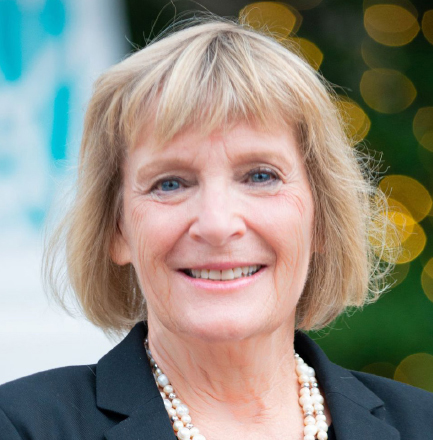
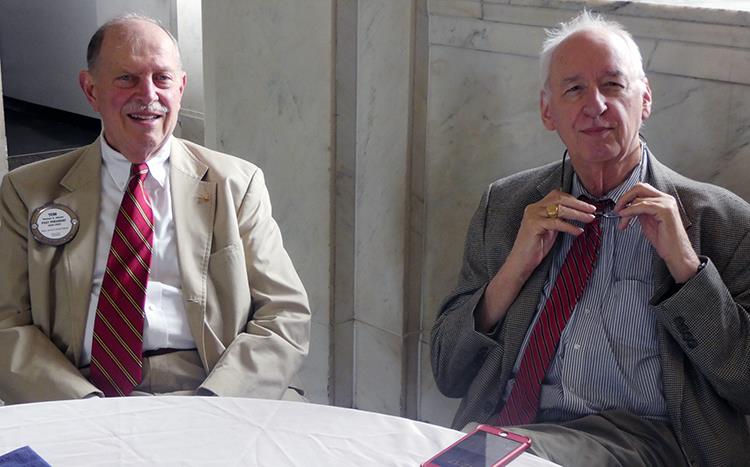
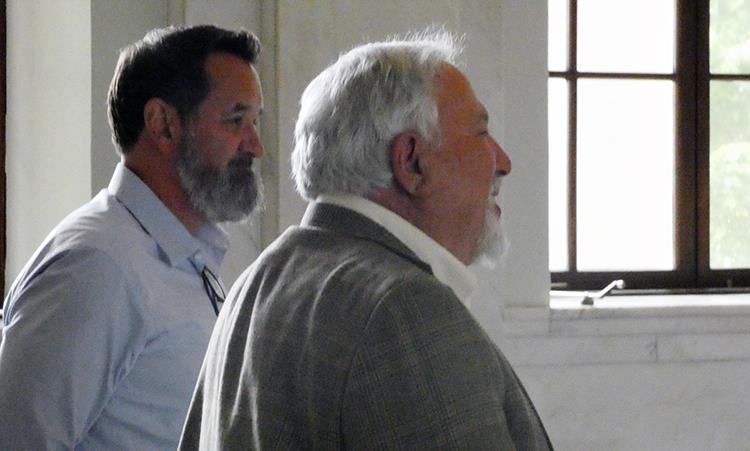
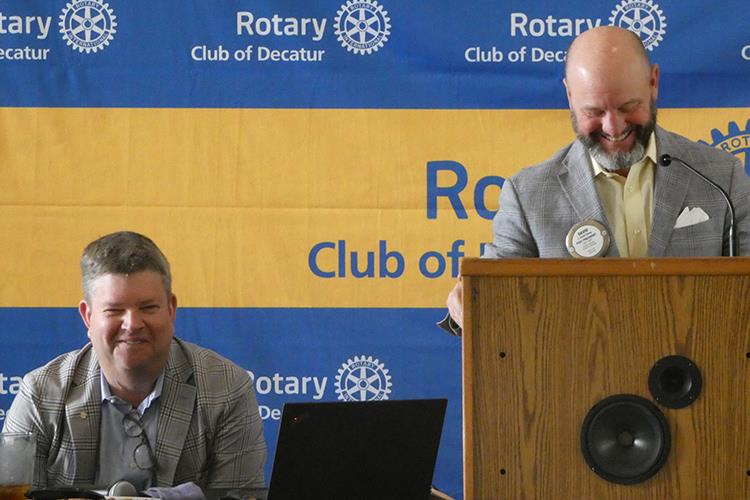
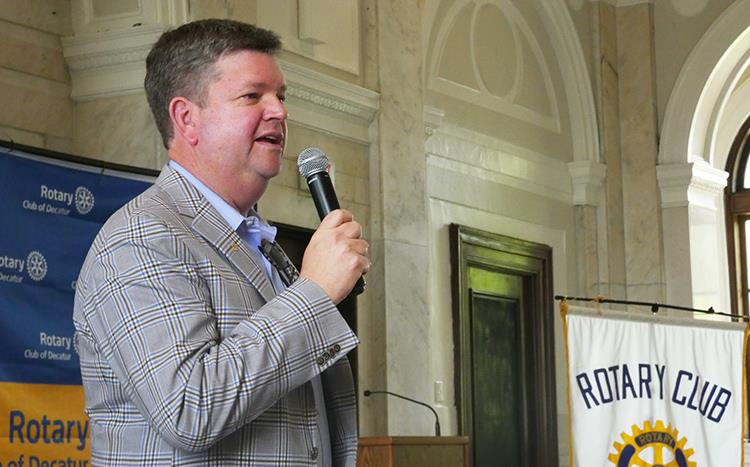
David Ewing shares a laugh with our keynote speaker, Chad Parker, president and GM of the East Lake Club.
As president and general manager, Chad is responsible for the overall operation of East Lake Golf Club and the Charlie Yates Golf Course. East Lake has hosted the PGA Tour’s season finale event, the Tour Championship, 22 times since 1998.
Under Chad's leadership, the golf program at the East Lake Club has flourished. He developed a comprehensive training program that includes group and individual lessons, as well as regular clinics and tournaments. But Chad's impact on the club goes beyond the golf program. As a respected member of the community, and he is always looking for ways to give back. He organizes charity events and fundraisers to support local causes, and he works tirelessly to promote the club and attract new members.
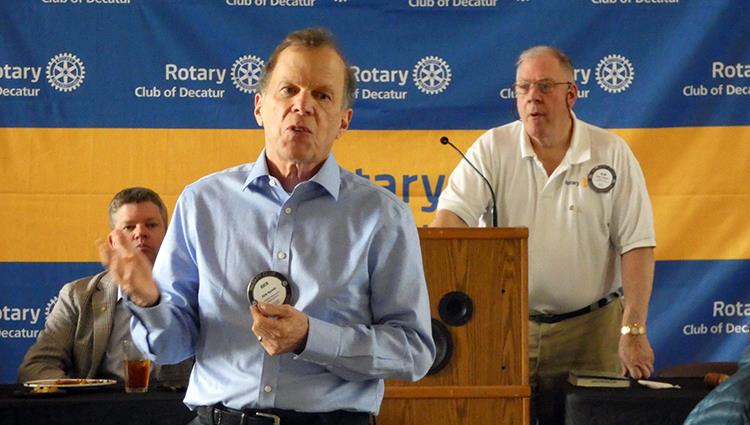
Chad Parker spoke about how Tom Cousin’s vision changed East Lake and the entire area.
Chad spoke in detail how East Lake has been the hub of Tom Cousin’s revitalization of the area.
Chad spoke about Tom Cousins' holistic model for community development that is a comprehensive approach that seeks to address the root causes of poverty and social inequality by providing opportunities for education, job training, and community involvement.
At the core of Cousins' model is the belief that healthy, thriving communities require more than just physical infrastructure and economic development. They also require strong social networks, a sense of belonging and empowerment, and access to resources and opportunities.
Cousins' model includes several key components, including:
• Education and job training: Cousins recognized that education and job training are essential for creating long-term economic opportunities for individuals and communities. His model includes programs that provide education and training opportunities for people of all ages, from early childhood education to vocational training and adult education.
• Affordable housing: Cousins believed that safe, affordable housing was a critical component of healthy communities. His model includes the development of affordable housing units for low-income families, as well as programs that provide financial assistance and support for home ownership.
• Health and wellness: Cousins recognized that physical and mental health are essential for overall well-being. His model includes programs that promote healthy living and wellness, including community health clinics, fitness programs, and nutrition education.
• Community involvement: Cousins believed that communities thrive when people are engaged and involved in their development. His model includes programs that encourage community involvement and empowerment, including civic engagement programs, community gardens, and neighborhood associations.
• Philanthropy and giving back: Cousins believed that those who have been successful have a responsibility to give back to their communities. His model includes philanthropic programs that support local causes and organizations, as well as volunteer and mentorship opportunities for individuals.
Overall, Cousins' holistic model for community development is a comprehensive approach that recognizes the interconnectedness of social, economic, and environmental factors in creating healthy and vibrant communities. By addressing these factors in a comprehensive and integrated way, Cousins believed that we can create communities that are sustainable, resilient, and thriving.

.png)